The Power of Being Heard
We often have a strong desire to feel listened to and understood. And when we don’t feel like our point-of-view is being heard, we can quickly become lonely, sad, frustrated, or even angry. This is one of the biggest contributors to conflict in our relationships and society as a whole.
A recent study published in the Journal of Experimental Social Psychology looked into this phenomenon. They studied the tension between Palestinians and Israelis, as well as Mexican immigrants and white Arizonans.
What they found was that when individuals were given a chance to share their stories and experiences with people from the other side, it helped improve their attitude about the “opposing group.” This effect was even stronger when it was a member of the “disempowered group” being heard by someone from the “dominant group.”
Disempowered groups often feel like their voice isn’t being heard. They think their values and needs aren’t being considered, and this can fuel resentment toward the more dominant group, who often has more of a stronghold over public debate.
However, when the dominant group makes an effort to hear things from another point-of-view, the disempowered group begins to feel that their values and needs are being listened to. This can be a great starting point for easing conflict and tension.
There has been a lot of research showing the positive benefits of perspective- taking in our relationships. This is one of the first studies to show that “perspective giving” – the opportunity to share our experiences with others – can be just as helpful in building stronger relationships.
However, researchers don’t recommend that the disempowered group does all the talking. Instead, they believe that this is evidence that each group should have an equal opportunity to share their viewpoints.
Studies like this have very real world implications on how we should approach our relationships. If we tend to be the more dominant voice, then it’s a good idea to step back and give the other person a chance to say what’s on their mind. Listening to what others say, without interrupting or being disrespectful, is going to help both of you to find ways to make your relationship more positive and rewarding.
If you are the more reserved voice, then it’s just as important that you find ways to express yourself. If a romantic partner, family member, or roommate isn’t giving you a chance to speak your mind, then it may be important to intervene and tell them that you need to sit down together and let your concerns be known.
In society and politics, we should also strive for ways to let everyone have an equal voice. In the Middle East, many are trying to put together “peace camps” to help resolve long-seated conflicts between Palestinians and Israelis. These camps are focused on open and respectful dialogue between opposing groups, in hopes that they can each begin to see things from the other’s point-of-view. While peace in the Middle East may still be far away, this is a step in the right direction.
Similarly, in the United States, there is still a lot of tension between government, corporations, and Occupy Wall Street protestors. In many ways, the violence associated with the OWS movement (both from police and protestors alike) is a result of a lack of communication. Maybe if OWS protestors were given an opportunity to express their concerns in a healthy and safe way (such as a town hall meeting or public forum), then maybe there would be less violence and aggression on the streets. People wouldn’t feel as frustrated, because at least they would feel their opinions are being heard and taken seriously.
When we don’t have these outlets to express ourselves, it can often lead to negative consequences for everyone involved. Being heard is important for both ourselves and others. It’s a part of healthy communication, and it leads to solutions we won’t find if we just ignore one another.
Learn More
Parenting a Child With Anxiety
Parenting a child with anxiety can be hard. You wish you could wave a magic wand and make all of their worries disappear. There is hope!
If your child struggles with worries or anxiety, you know how heartbreaking it can be to watch them struggle. You may feel helpless, unsure how to help. Sometimes, it’s hard to stay calm and patient when they are stuck in a difficult pattern of worry and can’t seem to move forward.
BIG FEELINGS. BIG CONFUSION.
Big feelings like anger, frustration, jealousy, anxiety, sadness, and stress can be overwhelming to kids. Without warning, their body is flooded with physical sensations – racing heart, tense muscles, sweat, tingling fingers.
Plus, their thoughts can get pretty confusing, “I hate you, mom!” on the outside may conflict with, “Wait, what? I don’t hate my mom, why did I just say that?” on the inside.When we step back, it’s easy to see why some kids feel so helpless when it comes to managing big feelings.
One way to empower your child (and to reassure them that they are totally normal), is to teach them about the brain.
THE BRAIN HAS LOTS OF JOBS:
What to tell your kids: “Have you ever thought about all of the things your brain is in charge of? I mean, your brain is the control center for pretty much everything you think, feel, or do! That’s pretty amazing. Let’s list some things your brain controls.”
For you: Keep this in mind when thinking about discipline. Changing your response can change the entire conversation, simply because you’ve appealed to a different part of the brain.
THEIR BRAIN IS GROWING AND CHANGING:
What to tell your kids: “Scientists say that when you do something over and over you create new pathways in your brain. When you were a baby, you couldn’t do much, but now your brain has learned so many things. And, guess what? Your brain is going to keep growing and changing until you’re much older.”
For you: You have the opportunity to influence strong, healthy, positive connections in your child’s brain by responding from a calm, confident, empathetic stance.
“THINKING” PART:
What to tell your kids: “Remember when we talked about the brain having a lot of different jobs? One part of your brain is in charge of making good decisions, managing your big feelings, thinking things through, and being empathetic.
For you: Sorry parents, this part is very slow to develop. I know you want your kids to have these skills right.now. but there’s no rushing this process. You can influence good pathways, though, remember?
“EMOTIONAL” PART:
What to tell your kids: “Ok, so there’s another part of the brain. This part is in charge of some really important things like breathing and digesting food, and it also holds a lot of your emotions! So, this is where your big angry or worried feelings come from!”
For you: This is the most primitive and reactive part of the brain. This is also the part that’s running the show during your child’s meltdown about having carrots for dinner.
FLIGHT, FIGHT OR FREEZE:
What to tell your kids: Inside your brain is a tiny part who’s job is to react to threats! When it thinks you are in danger it will tell you to do one of three things – run away, fight back, or freeze. Let’s think of some times when these responses would be really helpful.”
For you: You have this part in your brain too, it’s called the amygdala! Power struggles are often the result of two amygdala’s going head-to-head.
EMPOWERING YOUR KIDS
Now that you’ve laid the foundation, you can use this information to teach and talk about their thoughts, feelings and behaviors in terms of their brain function.
SOMETIMES THE BRAIN IS WRONG:
What to tell your kids: “There are times when your brain thinks there’s a problem, and sends you the signals to ‘fight, flight or freeze’ but there’s really no reason to panic.
Like when you see a big black thing on the floor of your room. Your body might freeze – not wanting to get any closer. You might scream, ‘Mom! There’s a huge spider in here!’ But, when we get down on the floor, we realize it is actually a piece of black fuzz!”
For you: This is true for you as well! Sometimes, your brain will tell you that the situation in front of you requires IMMEDIATE ATTENTION. Actually, in most cases, these things are not true emergencies.
BUILDING A BRIDGE
What to tell your kids: “I know it’s scary when you have such big feelings. Those thoughts and feelings can be very loud. But remember, you still have the control! We’re going to work together to switch from reacting to making choices when you’re feeling big feelings. Can you help me think of some things that may help?”
For you: If you know your child is responding from their emotions it’s time to switch tactics and get them thinking of the choices available to them. You can do this by responding with empathy, getting down to their level (literally), and creating space for connection.
CALM BRAINS MAKE GOOD CHOICES:
What to tell your kids: “Since our immediate feelings are not always right and amd can over-react in some situations, we need to make sure we use control to make decisions. I know this is hard to remember when our feelings tru to take charge, but we are going to practice and I’ll help you through it.”
For you: Instead of focusing on getting your child to calm down, think more about how you can calm the overwhelming emotion present. You’ll be better able to support, connect and empathize with your child’s big feelings.
Learn More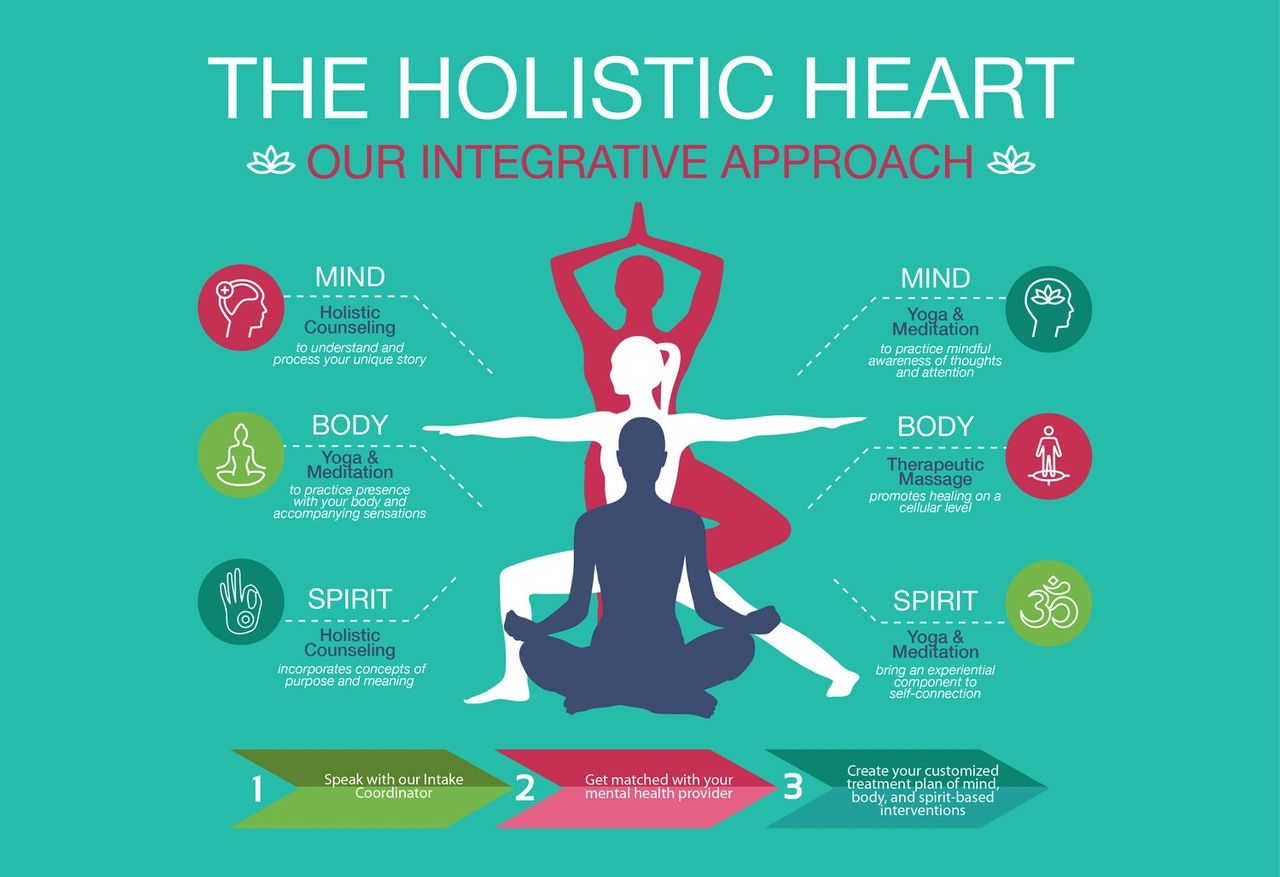
Holistic Healing
Why choose a holistic approach?
Trauma can manifest as chronic illness, depression can deplete the spirit, and anxiety can push relationships to their breaking point. These mental health conditions affect every aspect of life, so truly effective treatment must comprehensively address those same aspects. Too often, patients are treated as a series of symptoms, rather than a whole individual. This can lead to misdiagnoses, unsustainable results, and a great deal of frustration.
Treatment centers that take a holistic approach recognize that mental health conditions are biological, physiological, and spiritual conditions, not just brain-based diseases. This comprehensive approach promotes self-care and supports lasting wellness.
Which holistic services are most beneficial?
Each person’s struggles and hopes are unique, and a great holistic practitioner will be interested in hearing your personal story before determining whether their services will help you meet your wellness goals. Common holistic services include acupuncture, massage, fitness, nutrition, yoga, and mindfulness meditation. These holistic services, which play different but important roles in recovery, can be powerful individually, more so in combination, and even more so when the practitioners work together to coordinate your care.
- Acupuncture and massage offer relaxation, pain reduction, mood improvement, and an enhancement of the body’s innate healing abilities.
- Fitness and nutrition sessions are extremely individualized, and give patients the opportunity to practice prevention, develop healthy lifestyle habits, and workshop specific concerns surrounding energy, immunity, sleep, mood and more.
- Yoga and meditation help to cultivate awareness of the mind and body, and provide tools to more effectively manage stress.
Holistic vs. Western medicine
For many, the word holistic conjures images of yoga mats and herbal remedies, which is only a fraction of what makes up holistic treatment. In its truest sense, holistic simply means taking the whole system into account. Western medicine and holistic medicine are often incorrectly depicted as opposing viewpoints. However, a combination of the two typically yields quicker and more thorough recovery. A broken leg, for instance, merits a visit to the doctor for an X-ray and cast. But eating nourishing food, receiving acupuncture, and practicing meditation may help to manage pain, reduce stress, and speed the healing process. The same can be true of anxiety, depression, PTSD, or any mental health condition. Medication (prescribed thoughtfully and only as necessary), psychotherapy, and holistic treatments can complement and balance one another to help you achieve authentic wellness
Learn More